Overview
The adenoids are part of the immune system and are useful in early childhood — but they often outlive their purpose, staying enlarged and physically obstructing the airway. Frequent infections, allergic rhinitis, and reflux can keep them swollen.
Removing them does not weaken the immune system meaningfully — other lymph tissue takes over. What changes is breathing: through the nose again, with proper Eustachian tube ventilation and a quieter night.
When This Surgery Is Recommended
- Persistent mouth breathing day and night
- Loud snoring or features of sleep-disordered breathing
- Recurrent ear infections or persistent glue ear (often combined with grommets)
- Chronic rhinosinusitis in children
- Nasal-sounding speech with no other obvious cause
The Procedure
A short day-care operation under general anaesthesia. The mouth, not the nose, is used for access.
- The child is asleep under general anaesthesia
- A mirror or endoscope is used to visualise the adenoid pad
- The adenoids are removed with a curette or coblation device
- Bleeding is controlled with cautery or simple pressure
- No external incision, no stitches
Pre-Surgery Preparations
- Fast 6 hours pre-op (anaesthetist gives specific instructions for infants)
- Inform the team about recent colds, fever, or asthma episodes
- Continue ear drops and asthma inhaler as advised
- Bring the vaccination card and previous ENT records
- Comfortable change of clothes; favourite blanket or toy for the child
- One parent with the child throughout admission and discharge
Post-Surgery Recovery
- Discharge the same day in most cases
- A sore throat for 3–5 days, eased by paracetamol and fluids
- Soft, cool foods preferred for the first few days
- Some children have a temporarily nasal voice for 1–2 weeks
- Back to school in 5–7 days
Follow-up Schedule
- Day 1 — discharge after observation; pain control plan reviewed
- Day 7 — clinic review of throat and nose healing
- Week 4 — nasal endoscopy to confirm no early regrowth
- Week 12 — hearing test if grommets were inserted at the same sitting
- 6 months — routine review
Potential Complications
- Small post-operative bleed (under 1%)
- Temporary change in voice quality
- In rare cases, fluid can briefly come into the nose when swallowing — usually self-correcting
- Need for a small revision in a small percentage if regrowth occurs
At Dr. Naseer's ENT, we often combine adenoidectomy with grommets — one anaesthetic, both problems addressed, much easier on a young child than two separate operations.
Why Have It Here
Adenoidectomy is straightforward in skilled hands, and we do many in combination with grommets where indicated. We are happy to assess a child whose family is unsure — sometimes the answer is medical, not surgical.
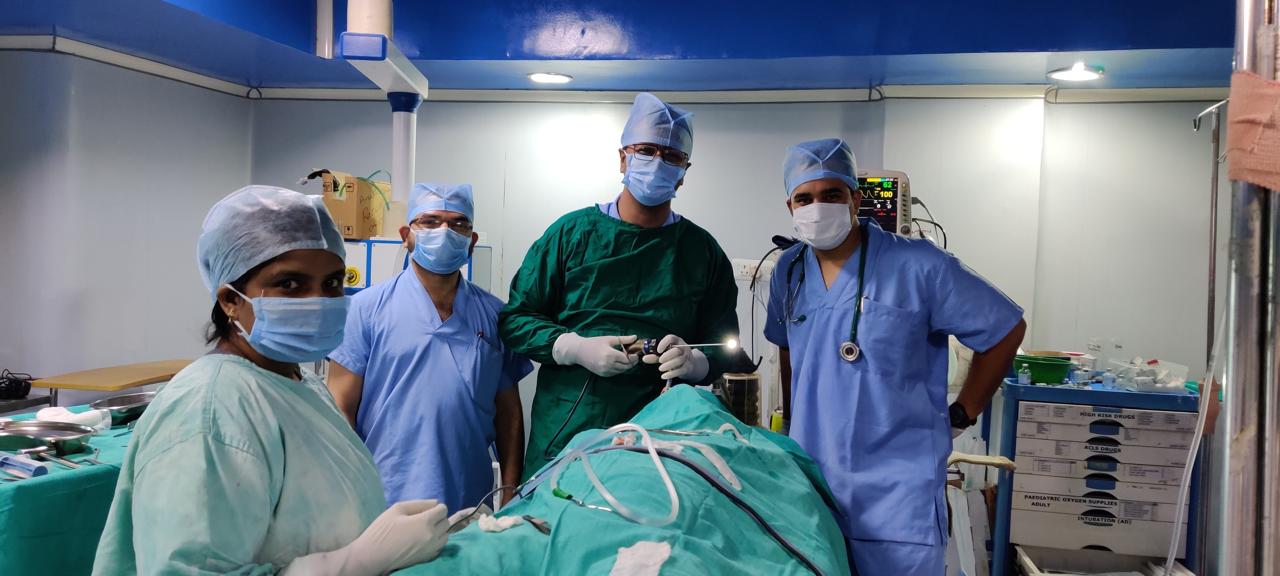 In-house surgical practice · Dr. Naseer's ENT