Home / Surgeries / Myringoplasty
Ear Surgery

Myringoplasty — sealing the eardrum, restoring the hearing.

Myringoplasty repairs a perforated eardrum using the patient's own tissue as a graft. It restores the natural sound-transmitting membrane, eliminates the route for water and germs to enter the middle ear, and usually improves hearing as a bonus.

Medical nameTympanic Membrane Repair
Duration45–60 minutes
AnaesthesiaGeneral (Local in selected cases)
ApproachMicroscopic / Endoscopic
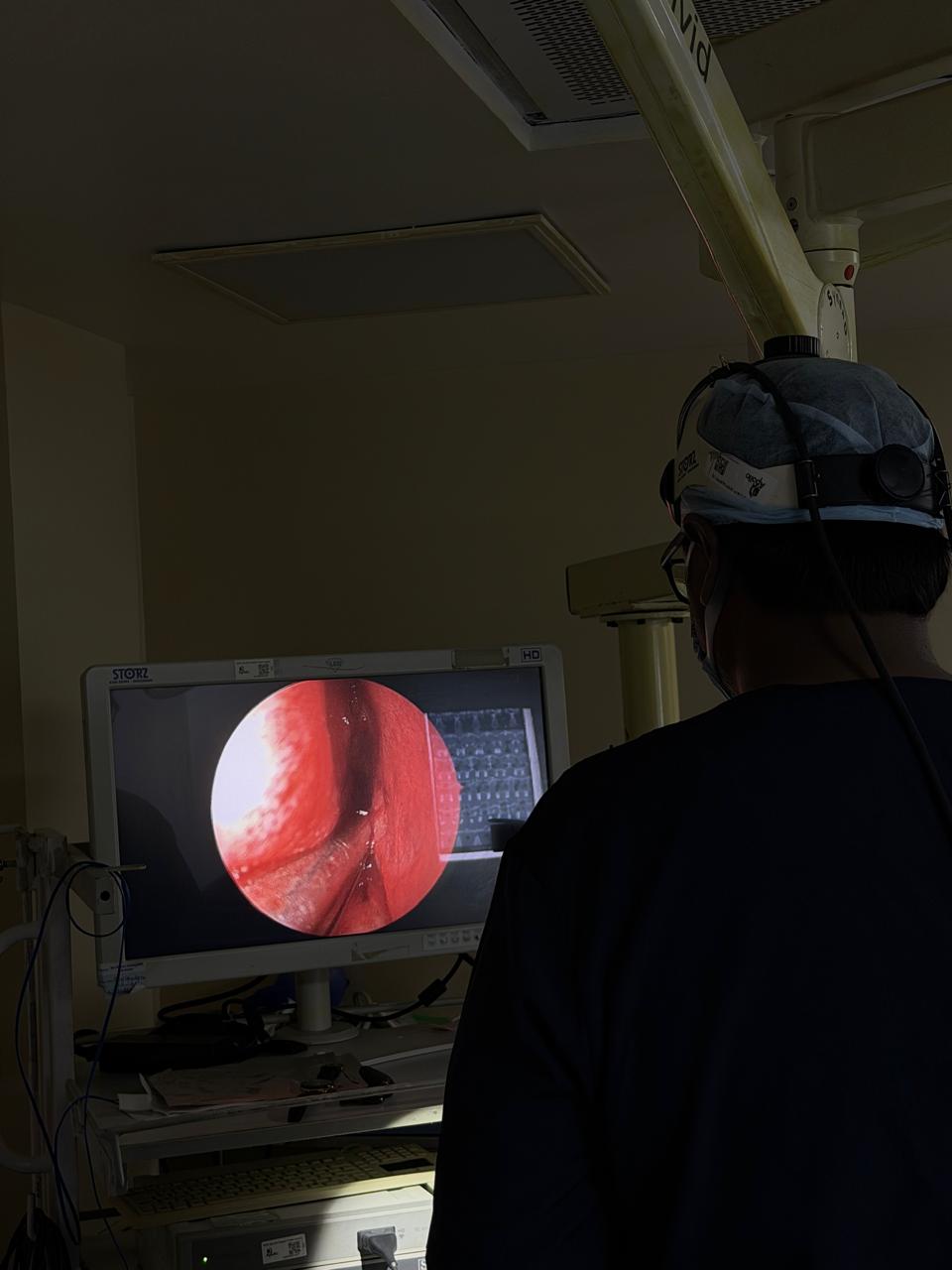
In-clinic ENT surgical setup In-house surgical practice · Dr. Naseer's ENT

Overview

A perforation in the eardrum can be left behind by an ear infection, a slap, a Q-tip injury, or a previous grommet that didn't heal over. While many small holes close on their own within weeks, longer-standing perforations rarely do — and they keep the ear vulnerable to discharge and hearing loss.

Modern endoscopic technique allows the entire repair to be done through the ear canal without an external incision in most cases, with cosmetic results indistinguishable from no surgery.

When This Surgery Is Recommended

  • A persistent eardrum perforation lasting more than 3 months
  • Recurrent discharge or infection through the perforation
  • Conductive hearing loss from the membrane defect
  • A need to swim, dive, or fly without ear-canal precautions
  • Pre-cochlear-implant work-up where a sealed middle ear is required

The Procedure

Performed under general anaesthesia in most cases. Endoscopic or microscopic approach depending on the size and position of the perforation.

  • A small graft of temporalis fascia or tragal cartilage is harvested
  • The edges of the perforation are freshened to encourage healing
  • The graft is positioned to support the eardrum from underneath
  • Absorbable sponge is placed to hold the graft until vessels grow in
  • The ear is closed with no visible external scar in endoscopic cases

Pre-Surgery Preparations

  • Fast for 6–8 hours; sips of water permitted till 2 hours pre-op
  • Stop blood thinners 5–7 days before with cardiology clearance
  • Avoid ear drops for 48 hours prior unless specifically prescribed
  • Bring audiograms, previous ear records, and a complete medication list
  • Hair wash the morning of surgery; remove ear/face piercings
  • Arrange transport and a companion at home for 24 hours

Post-Surgery Recovery

  • Day-care or one overnight stay depending on technique
  • Mild discomfort and fullness for the first week
  • Strictly no water in the ear for 4 weeks
  • Office work in 7 days; flying and swimming after 6–8 weeks
  • First post-op review with the ENT at 2 weeks; hearing assessed at 8 weeks

Follow-up Schedule

  • Day 7 — outer dressing and stitches removed in clinic
  • Week 2 — ear canal gently cleared under direct vision
  • Week 6 — graft integrity reviewed; water restrictions discussed
  • Week 8 — post-operative audiogram
  • 3 months — final review

Potential Complications

  • Graft non-take in about 5–10% — usually fixable with a small revision
  • Temporary metallic taste on the operated side
  • Mild post-operative dizziness for 24–48 hours
  • Rarely, the new eardrum can re-perforate over time
At Dr. Naseer's ENT, endoscopic myringoplasty has changed what a perforated-eardrum repair feels like — most patients walk in and walk out the same day.

Why Have It Here

We routinely use endoscopic myringoplasty in suitable cases — no incision behind the ear, faster recovery, and the ability to see the entire perforation rim in high definition during repair.

Have questions about Myringoplasty? Let's talk before you decide.