Overview
Snoring and OSA are airway-level problems: in any single patient, the collapse may happen at the nose, soft palate, base of tongue, or all three. Surgery only helps when it targets the actual site of obstruction — which is why a thorough work-up (and sometimes a drug-induced sleep endoscopy) matters more than the operation itself.
UPPP — uvulopalatopharyngoplasty — is the most common palatal procedure. It removes part of the soft palate and uvula, and reshapes the throat to widen the airway. It is one tool among several rather than a universal answer.
When This Surgery Is Recommended
- Moderate to severe OSA where CPAP is not tolerated
- Habitual loud snoring affecting partners or housemates
- Children with OSA from enlarged tonsils and adenoids (usually adenotonsillectomy alone)
- Selected anatomical obstruction in adults (long uvula, redundant palate)
- Combined with septoplasty or turbinate surgery when nasal obstruction also contributes
The Procedure
A short operation under general anaesthesia through the open mouth. Specific technique depends on findings.
- A pre-operative sleep study confirms severity
- Drug-induced sleep endoscopy identifies the exact site of collapse
- Through the mouth, redundant soft palate tissue is trimmed
- The uvula is reshaped or partially shortened
- Tonsils, if not already removed, are addressed at the same sitting
Pre-Surgery Preparations
- Pre-op sleep study confirms severity and baseline AHI
- Drug-induced sleep endoscopy (DISE) maps the levels of obstruction
- Weight, blood pressure, and cardiac fitness optimised pre-op
- Stop blood thinners 7 days before surgery
- Fast 6 hours pre-op
- Plan 2 weeks off work; soft, cool diet stocked at home
Post-Surgery Recovery
- One overnight stay
- Significant throat soreness for 7–10 days
- Soft, cool diet for the first week
- Office work in 2 weeks; full recovery in 3–4 weeks
- Sleep study repeated at 3 months to assess improvement
Follow-up Schedule
- Day 1 — pain control and swallowing reviewed before discharge
- Day 7 — throat healing checked; fluid intake confirmed adequate
- Week 3 — diet expansion and daytime alertness check
- Week 12 — repeat sleep study to measure apnea reduction
- 6 months — long-term sleep and weight check
Potential Complications
- Pain that significantly limits eating for the first week
- Velopharyngeal incompetence — food or fluid coming into the nose when swallowing
- Voice change with nasal quality (small percentage)
- Variable improvement in apnea severity — some patients still need CPAP
- Bleeding (small risk)
At Dr. Naseer's ENT, we don't reach for UPPP as a first-line answer — we map the obstruction first, then combine the right procedures to address it.
Why Have It Here
Sleep surgery only helps the right patients. We do the work-up properly first — sleep study, drug-induced endoscopy where useful — so the operation chosen actually matches the level of obstruction. Many patients who think they need UPPP turn out to benefit more from nasal work or weight management first.
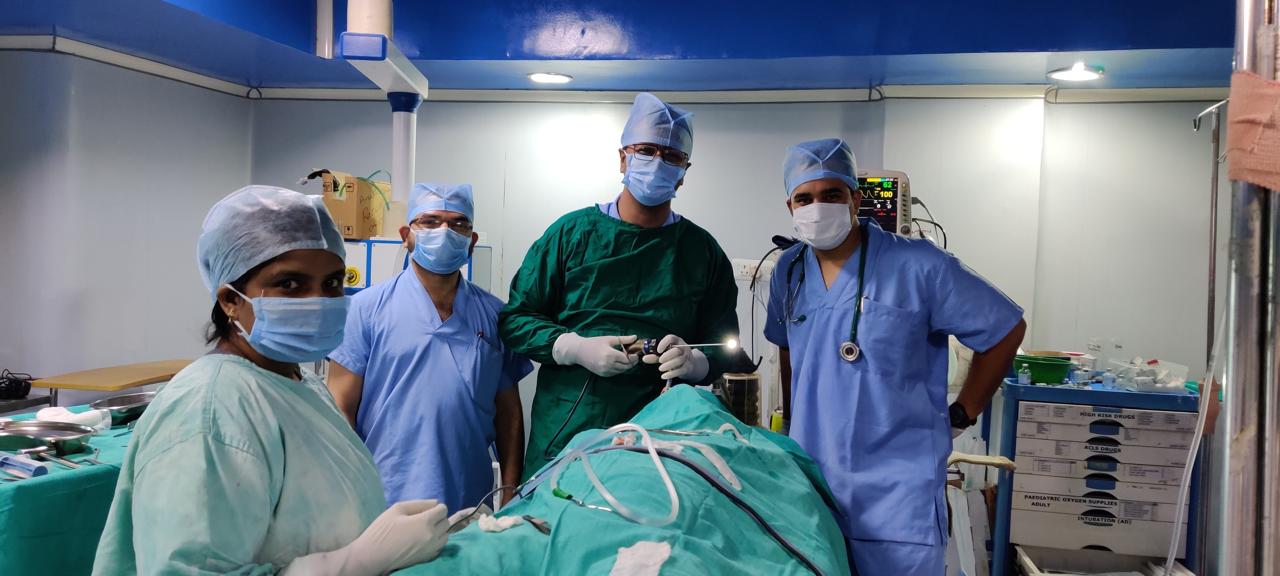 In-house surgical practice · Dr. Naseer's ENT