Overview
The mastoid is a honeycomb of bone behind the ear that connects to the middle ear. Chronic infection or cholesteatoma can fill these cells with disease that no antibiotic course will clear.
A mastoidectomy creates a single, smooth, easy-to-clean cavity (canal-wall-down) or preserves the natural anatomy (canal-wall-up), depending on the extent of disease. Where possible, the hearing chain is reconstructed in the same sitting.
When This Surgery Is Recommended
- Cholesteatoma confirmed on examination or imaging
- Chronic suppurative otitis media unresponsive to medical management
- Mastoiditis as a complication of acute infection
- Suspected intracranial extension of middle-ear disease
- Some cases of facial-nerve weakness in chronic ear disease
The Procedure
Performed under general anaesthesia through a small incision behind the ear. The procedure uses an operating microscope and a high-speed surgical drill.
- An incision is made behind the ear, exposing the mastoid bone
- The diseased air cells are drilled away under direct vision
- Cholesteatoma and granulation tissue are carefully removed
- The facial nerve and inner ear structures are kept safe under nerve monitoring
- The hearing chain is reconstructed where suitable
- The wound is closed in layers with a small drain in some cases
Pre-Surgery Preparations
- Pre-operative admission for full work-up — imaging review, blood tests, fitness
- Fast for 8 hours before surgery
- Stop blood thinners 7 days before with cardiology approval
- Hair clipped behind the ear on the day of surgery
- High-resolution CT scan reviewed and consent process completed on admission
- Companion advised at home for the first week after discharge
Post-Surgery Recovery
- 2–3 days in hospital after surgery
- A pressure dressing is worn for the first 24–48 hours
- Stitches removed at 7–10 days
- Strictly dry ear for 4–6 weeks
- Final hearing assessment at 8–12 weeks
Follow-up Schedule
- Day 3 (in hospital) — drain removal and pressure dressing change
- Day 7 — first outpatient clinic review for stitches and wound check
- Week 3 — first microscopic cleaning of the mastoid cavity
- Monthly for 3 months — cavity care and audiograms
- 6 and 12 months — long-term cavity stability checks
Potential Complications
- Disease recurrence (5–15% lifetime risk, lower with newer techniques)
- Temporary or rarely permanent facial-nerve weakness
- Altered taste on the operated side
- Hearing may not return fully if disease has been extensive
- Dizziness for 1–2 weeks during inner-ear adaptation
At Dr. Naseer's ENT, we believe in a thorough first operation rather than a quick one — recurrence rates drop sharply when the entire disease is taken out cleanly.
Why Have It Here
Mastoid surgery is unforgiving — facial nerve, inner ear, and brain coverings are all millimetres away. We perform it with facial-nerve monitoring routinely and discuss whether canal-wall-up or canal-wall-down approach suits your disease and lifestyle.
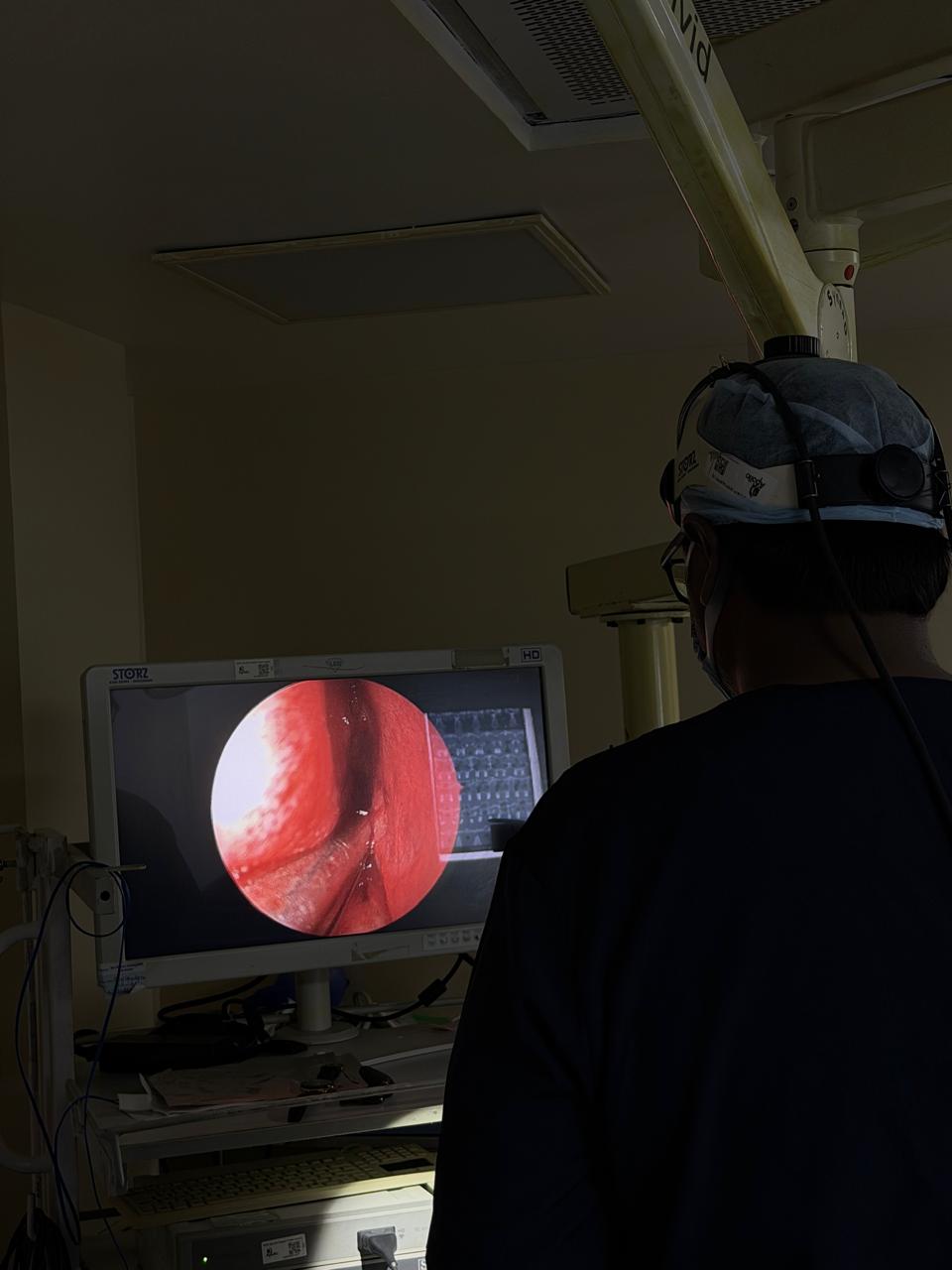 In-house surgical practice · Dr. Naseer's ENT