Overview
The vocal cords vibrate hundreds of times per second to produce voice. Even tiny changes in their surface — a polyp the size of a sesame seed — can alter the sound dramatically. Equally, surgical scar on the vibrating margin can leave a permanently rough voice. Microlaryngoscopy is precision work performed under high magnification with tiny instruments designed to spare the surface.
Many adults with persistent hoarseness come to us after weeks of voice rest and antibiotics have not helped. A flexible nasendoscopy in clinic shows the lesion; microlaryngoscopy removes it; voice therapy supports the recovery.
When This Surgery Is Recommended
- Vocal-cord polyps, nodules, or cysts causing persistent hoarseness
- Reinke's oedema (smoker's voice) interfering with daily speech
- Suspicious lesions needing biopsy
- Early laryngeal cancer (selected, very early stages)
- Vocal-cord papillomatosis (recurrent benign growths)
The Procedure
A short procedure under general anaesthesia. A rigid laryngoscope holds the airway open while the operating microscope and micro-instruments work through it.
- The patient is asleep with the laryngoscope holding the airway open
- The vocal cords are viewed under high magnification
- Lesions are gently grasped and excised at the surface plane only
- The vibrating margin of the cord is preserved
- Tissue is sent for histology where indicated
Pre-Surgery Preparations
- Fast 6 hours pre-op
- Voice rest for 2–3 days before surgery (in selected cases)
- Stop NSAIDs 5–7 days pre-op
- Stop blood thinners 7 days before with cardiology clearance
- Bring previous laryngeal video records and audio samples if available
- Companion to drive home — voice rest applies from immediately after surgery
Post-Surgery Recovery
- Same-day discharge for almost all patients
- Strict voice rest for 7–10 days — no speaking, no whispering
- Soft food and good hydration
- Voice therapy referral arranged before discharge in most cases
- Voice improvement typically over 4–6 weeks
Follow-up Schedule
- Day 1 — same-day discharge with strict voice-rest instructions
- Week 1 — flexible nasendoscopy to check cord healing
- Week 2 — voice therapy commences alongside healing
- Week 6 — structured voice review
- Week 12 — histology results plus functional voice analysis
Potential Complications
- Dental damage from the rigid laryngoscope (rare; pre-operative dental review reduces this)
- Mild throat or tongue soreness for a few days
- Possibility of a small scar on the cord with persistent hoarseness
- Recurrence of the lesion (especially papillomatosis)
- Voice rest must be observed for best results
At Dr. Naseer's ENT, voice surgery is half technique and half restraint — we work in the surface plane only, send histology where indicated, and pair the operation with voice therapy for the best long-term outcome.
Why Have It Here
Voice surgery is about what you don't do as much as what you do. We work conservatively with the vibrating margin, send biopsies routinely when there is any concern, and refer for voice therapy in the same week — the surgery is only one part of a good recovery.
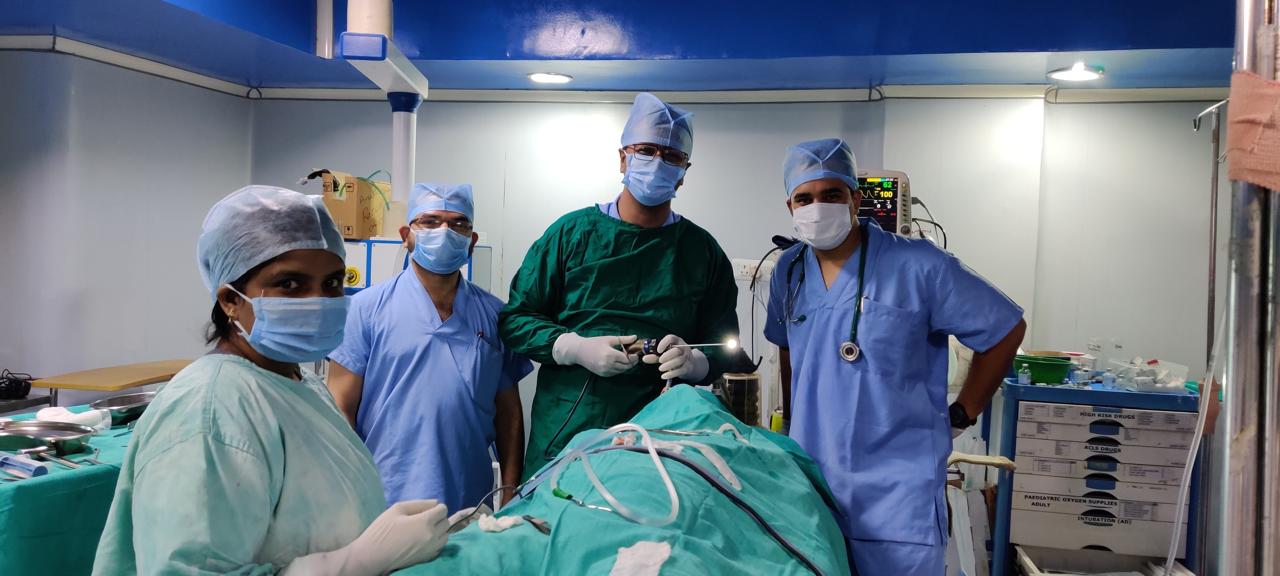 In-house surgical practice · Dr. Naseer's ENT