Home / Surgeries / Ossiculoplasty
Ear Surgery

Ossiculoplasty — rebuilding the hearing bones.

Ossiculoplasty rebuilds the chain of tiny bones (malleus, incus, stapes) that conduct sound through the middle ear. Done when one or more of these bones have been eroded by chronic infection or damaged by trauma, the procedure can restore meaningful hearing in a single sitting.

Medical nameOssicular Chain Reconstruction
Duration60–90 minutes
AnaesthesiaGeneral
ApproachMicroscopic
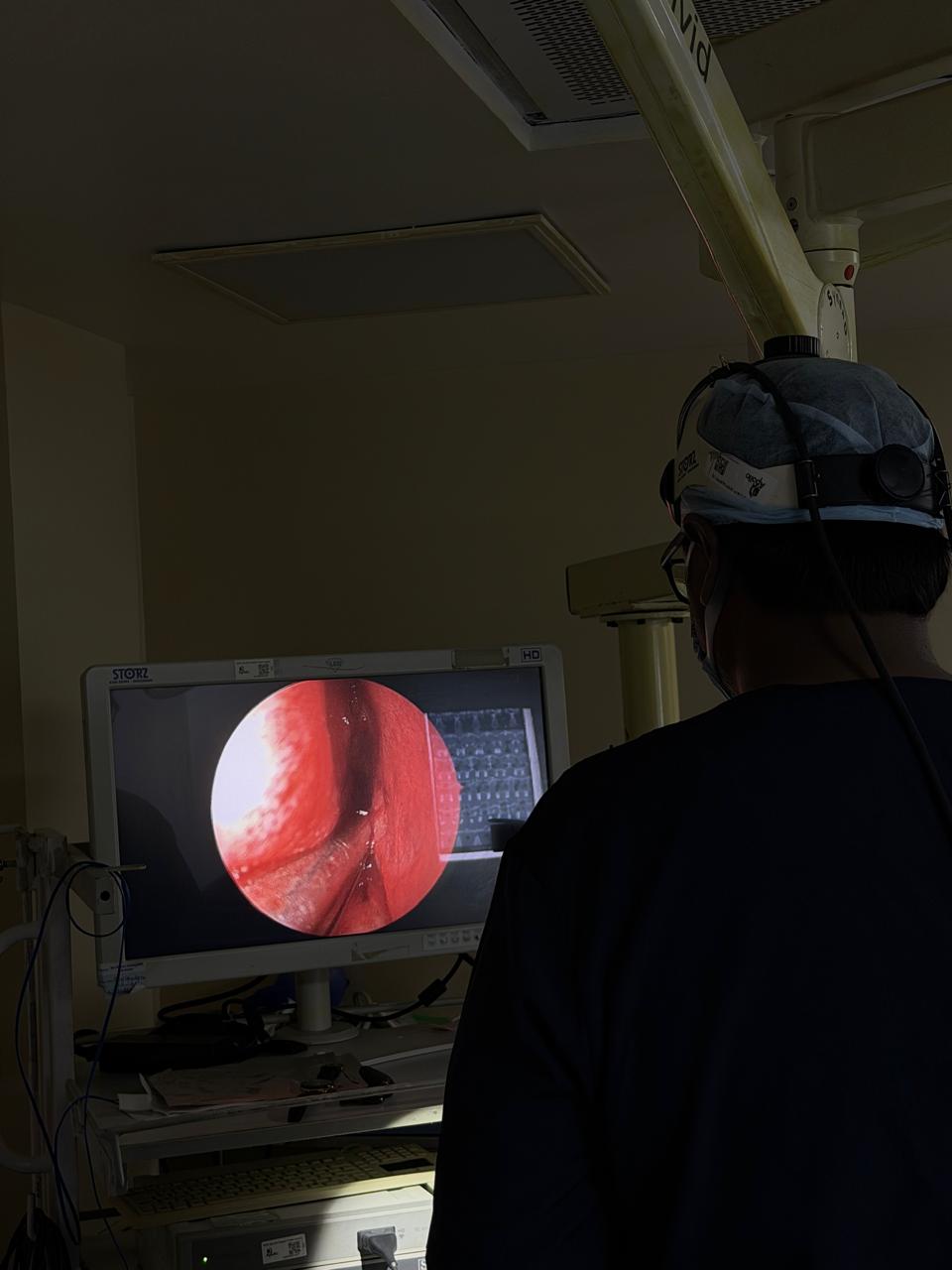
In-clinic ENT surgical setup In-house surgical practice · Dr. Naseer's ENT

Overview

The three middle-ear bones — the malleus, incus, and stapes — work as a lever system, transmitting eardrum vibration into the inner ear. Chronic infections, cholesteatoma, or trauma can erode part of this chain, leaving the eardrum vibrating but no sound reaching the cochlea.

Ossiculoplasty re-establishes the connection using either the patient's own remodelled bone, cartilage from the same ear, or a small titanium prosthesis. It is often combined with tympanoplasty (eardrum repair) in the same operation.

When This Surgery Is Recommended

  • Conductive hearing loss after chronic middle-ear infection
  • Erosion of one or more ossicles by cholesteatoma
  • Discontinuity of the chain following head injury or skull-base trauma
  • Persistent hearing loss after a previous middle-ear surgery
  • Selected cases of congenital ossicular fixation

The Procedure

Performed under general anaesthesia using an operating microscope. The middle ear is approached either through the ear canal or through a small incision behind the ear, depending on access needs.

  • The eardrum is gently lifted to expose the middle-ear space
  • Diseased tissue and residual eroded bone are removed
  • A reconstruction graft (cartilage or titanium prosthesis) is placed to bridge the gap
  • The eardrum is repaired in the same sitting when necessary
  • A light dressing is left in the canal to support healing

Pre-Surgery Preparations

  • Fast for 6–8 hours before surgery; clear fluids permitted till 2 hours prior
  • Stop blood-thinning medication (aspirin, clopidogrel) 5–7 days before with cardiology clearance
  • Avoid ear drops for 48 hours prior unless specifically prescribed
  • Bring all previous audiograms, ear imaging, and a current medication list
  • Wash hair the morning of surgery; remove ear/face jewellery and makeup
  • Arrange a responsible adult to drive you home and stay overnight

Post-Surgery Recovery

  • Discharge typically next day after a single overnight stay
  • Mild pain or fullness in the ear for 3–5 days
  • Avoid water entering the ear for 4 weeks; no swimming for 6 weeks
  • Hearing improvement assessed at 6–8 weeks once swelling settles
  • Return to desk work in 7–10 days; avoid heavy lifting for 4 weeks

Follow-up Schedule

  • Day 1 — ear-canal dressing checked before discharge
  • Day 7 — outer dressing and stitches removed in clinic
  • Week 4 — microscopic ear canal cleaning to clear any granulations
  • Week 8 — first post-operative audiogram to measure hearing gain
  • 3 months — final review with audiogram comparison

Potential Complications

  • Hearing improvement may not be complete (~70–80% achieve useful gain)
  • Prosthesis displacement requiring revision in a small number of cases
  • Temporary altered taste on the operated side
  • Very rarely, worsening of hearing rather than improvement
At Dr. Naseer's ENT, we use modern titanium prostheses and microsurgical technique, with intra-operative testing wherever it adds value.

Why Have It Here

We perform middle-ear reconstruction in-house with intra-operative audiometric assessment where appropriate, and discuss prosthesis options with you beforehand. Many of our reconstruction patients hear measurably better at their six-week review.
Have questions about Ossiculoplasty? Let's talk before you decide.