Overview
CSF can leak into the nose through a small defect in the thin bone of the skull base — most often after trauma, after sinus or skull-base surgery, or spontaneously (typically in patients with raised intracranial pressure).
Endoscopic repair has replaced open neurosurgical approaches for almost all of these cases. A graft of fat, fascia, or mucosa is layered over the defect, and recovery is much shorter than after open surgery.
When This Surgery Is Recommended
- Clear watery nasal discharge confirmed as CSF on beta-2 transferrin testing
- Post-traumatic CSF leak not settling on conservative management
- Spontaneous CSF leak associated with raised intracranial pressure
- CSF leak complicating sinus or skull-base surgery
- Recurrent meningitis with a suspected occult leak
The Procedure
A precise endoscopic operation under general anaesthesia. CT and sometimes MR cisternography are used pre-operatively to locate the defect.
- The exact site of the leak is identified endoscopically
- Mucosa around the defect is gently raised away
- A graft (fat, fascia, or mucosa) is positioned across the defect
- A second supporting layer is often added for security
- Tissue glue or absorbable packing supports the graft until it incorporates
Pre-Surgery Preparations
- Full work-up — CT cisternography or MRI, ICP measurement when relevant
- Prophylactic antibiotics started 24 hours pre-op per protocol
- Fast 8 hours before surgery
- Stop all blood thinners 7 days before
- Counselling on the planned lumbar drain (if applicable) and bed-rest protocol
- Family presence advised for psychological support post-op
Post-Surgery Recovery
- 5–7 days in hospital for monitoring
- Strict bed-rest with head-up positioning for 48 hours
- Avoid coughing, straining, nose blowing for several weeks
- A lumbar drain is occasionally used for short-term CSF diversion
- Office work in 3–4 weeks; full activity in 6 weeks
Follow-up Schedule
- Days 1–7 (in hospital) — bed-rest, drain management, careful monitoring
- Day 10–14 — discharge review and bed-rest taper
- Week 4 — nasal endoscopy and graft check
- Week 12 — confirmation of graft integration; ICP reassessed
- 6 and 12 months — long-term leak surveillance
Potential Complications
- Initial repair success rate 90–95%; revision occasionally needed
- Meningitis risk if leak recurs unrecognised — careful monitoring is essential
- Pressure-related leaks may need long-term medication or shunting
- Bleeding or sinus complications, all uncommon
At Dr. Naseer's ENT, we workup CSF leaks thoroughly before operating — finding the exact site, the cause, and any treatable intracranial pressure problem so the repair holds long-term.
Why Have It Here
CSF leak repair is unforgiving — the difference between brain coverings and a sinus is millimetres. We work it up properly first (location, cause, intracranial pressure) before reaching for the operation, because the right plan matters more than a quick one.
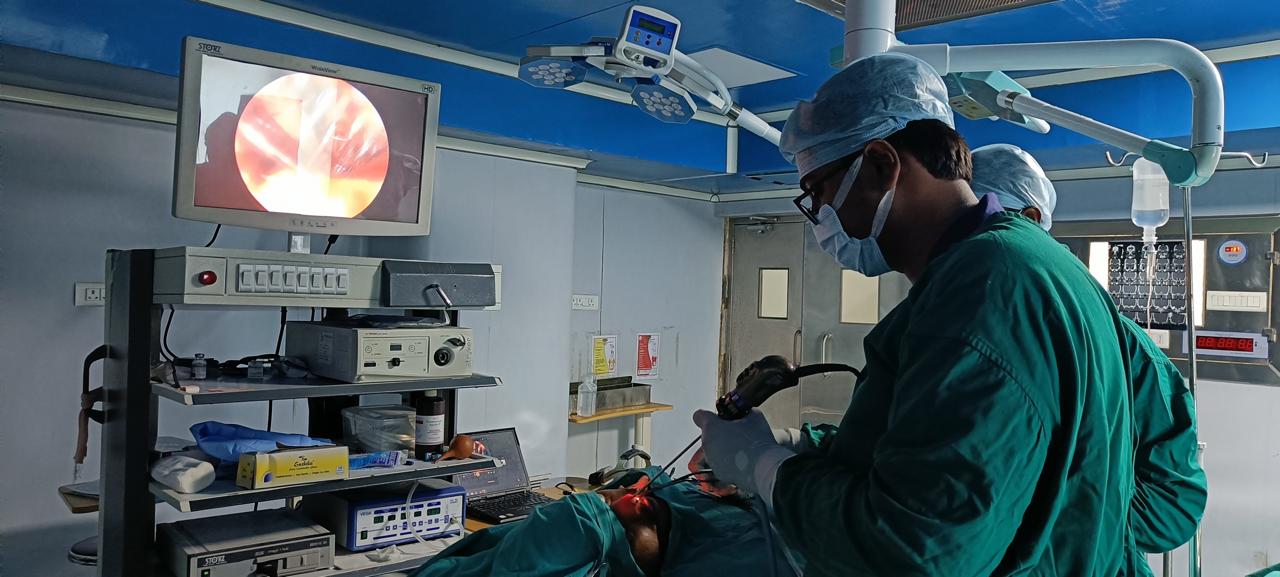 In-house surgical practice · Dr. Naseer's ENT