Overview
The septum is the thin partition of cartilage and bone between the two nostrils. A deviation can be present from birth or acquired through trauma. Turbinates are normal anatomical structures whose volume can swell in chronic inflammation, sometimes irreversibly.
Modern septoplasty is endoscopic and conservative — only the deviated portion of cartilage and bone is reshaped, leaving the structural support of the nose intact. Turbinate reduction is most often done with radiofrequency or coblation, which preserves the lining.
When This Surgery Is Recommended
- Chronic one-sided or alternating nasal blockage
- Mouth breathing, especially at night
- Recurrent sinus infections related to a deviated septum
- Persistent nasal congestion despite maximal medical therapy
- Difficulty using CPAP for sleep apnea because of nasal obstruction
The Procedure
Done under general anaesthesia through the nostrils. There are no external incisions and no change to the external nose shape.
- A small incision is made inside one nostril
- The lining is lifted off the septum to expose the deviated portion
- Deviated cartilage and bone are removed or reshaped
- The lining is replaced over the corrected septum
- Turbinate volume is reduced using radiofrequency or coblation
- Soft silicone splints are sometimes used to support healing
Pre-Surgery Preparations
- Fast 6 hours pre-op
- Stop blood thinners and NSAIDs 5–7 days before surgery
- Daily saline rinses for 2 days pre-op
- Bring reference photographs of your nose so the external shape can be matched
- Continue allergy medication unless told otherwise
- Companion to drive home — ride-share is not advised on day 0
Post-Surgery Recovery
- Day-care or one overnight stay
- No external bracing; the nose shape stays the same
- Saline rinses for 2 weeks
- Office work in 5–7 days; gym in 2–3 weeks
- Splints, if used, removed in clinic at 1 week
Follow-up Schedule
- Day 1 — splint and packing reviewed before discharge
- Week 1 — splints and packs removed in clinic
- Week 3 — nasal endoscopy and irrigation review
- Week 6 — airway symptom assessment
- Week 12 — final review, optional objective airflow test
Potential Complications
- Residual deviation needing minor revision (small percentage)
- Septal perforation (rare with conservative technique)
- Temporary numbness of the front teeth
- Bleeding (usually minor and self-limiting)
- Subtle change in nasal tip support with very aggressive technique (we avoid this)
At Dr. Naseer's ENT, most patients describe a significantly different sense of breathing — through both sides, evenly — within 4–6 weeks of surgery.
Why Have It Here
We do endoscopic septoplasty with conservative cartilage handling and coblation turbinate reduction — preserving the nose's structure and lining is part of what produces lasting results.
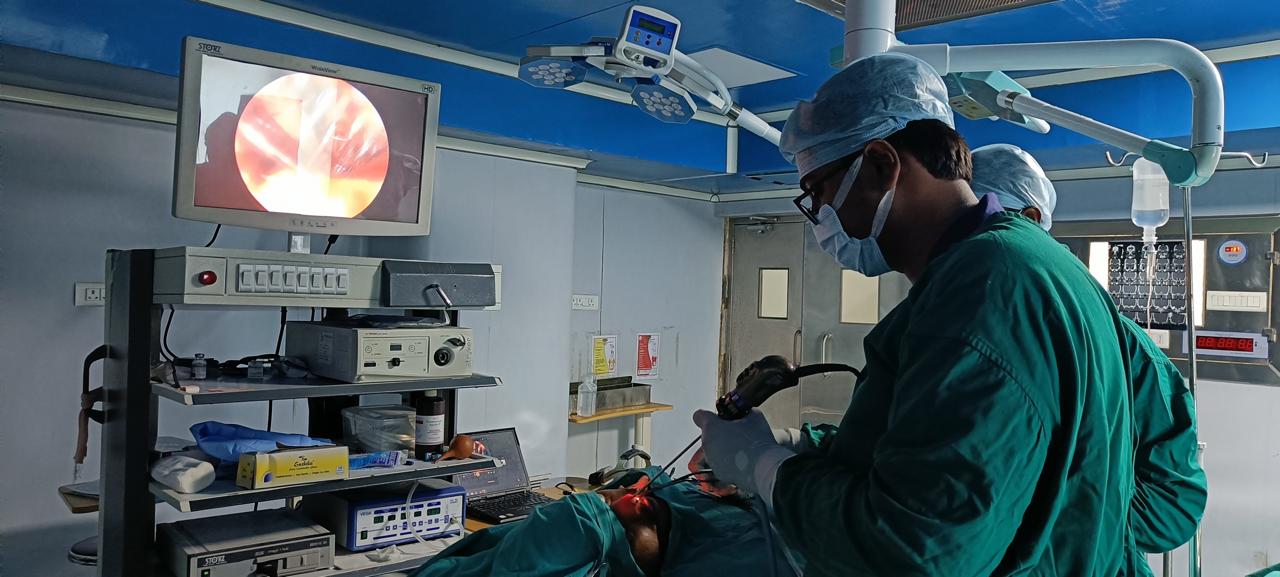 In-house surgical practice · Dr. Naseer's ENT