Overview
Otosclerosis runs in families and tends to begin slowly in early adulthood, often during pregnancy. The hallmark is a gradual conductive hearing loss with normal-looking eardrums on examination.
In the right hands, stapes surgery has a 90%+ rate of significant hearing improvement and is one of the most rewarding operations in otology. It is delicate work in a millimetre-scale field, but the post-operative experience for the patient is comparatively mild.
When This Surgery Is Recommended
- Bilateral or significant unilateral conductive hearing loss from otosclerosis
- Persistent hearing handicap despite hearing aid trial
- Audiogram showing the classic Carhart's notch pattern
- Patient preference for surgery over lifelong hearing-aid use
- Adequate inner-ear (cochlear) reserve on audiometry
The Procedure
A delicate microsurgical procedure performed under general anaesthesia. Some surgeons prefer local anaesthesia in selected adults.
- The eardrum is gently lifted to expose the middle ear under the microscope
- The fixed stapes bone is identified and confirmed
- A precise opening is made in the stapes footplate (stapedotomy)
- A small titanium or Teflon piston is hooked onto the incus and into the opening
- The eardrum is replaced and a small dressing is left in the canal
Pre-Surgery Preparations
- Fast 6–8 hours pre-op; clear fluids till 2 hours prior
- Stop blood thinners 5–7 days before with cardiology clearance
- Baseline audiogram and tympanometry recorded in chart
- Avoid ear drops for 48 hours pre-op
- Hair wash and clean ears morning of surgery; remove all ear jewellery
- Plan transport home — some patients feel dizzy for 24–48 hours
Post-Surgery Recovery
- Day-care or one overnight stay
- Mild dizziness for the first 24–48 hours is normal
- Office work in 5–7 days; avoid pressure changes (flying, diving) for 6 weeks
- Hearing improvement noticed immediately for some, by 4–6 weeks for others
- First post-operative audiogram at 6–8 weeks
Follow-up Schedule
- Day 1 — ear canal inspected; dressing trimmed before discharge
- Day 7 — outer ear-canal pack and stitches removed
- Week 6 — post-operative audiogram and hearing comparison
- 3 months — pressure and audiogram review
- 6 months — long-term prosthesis position check
Potential Complications
- Significant hearing improvement in 90–95% of cases
- Rare profound sensorineural hearing loss in the operated ear (<1%)
- Temporary or persistent taste alteration on the operated side
- Mild post-operative dizziness
- Tinnitus that often improves with hearing restoration
At Dr. Naseer's ENT, we use modern stapedotomy technique with laser or microdrill, titanium prosthesis, and an honest pre-operative conversation about the risk-benefit balance.
Why Have It Here
Stapes surgery is one of the most technically demanding procedures in otology, and outcomes are tightly correlated with surgical experience. We discuss outcomes, alternatives (hearing aids), and the small but real risk of profound loss before surgery so you can choose with clear eyes.
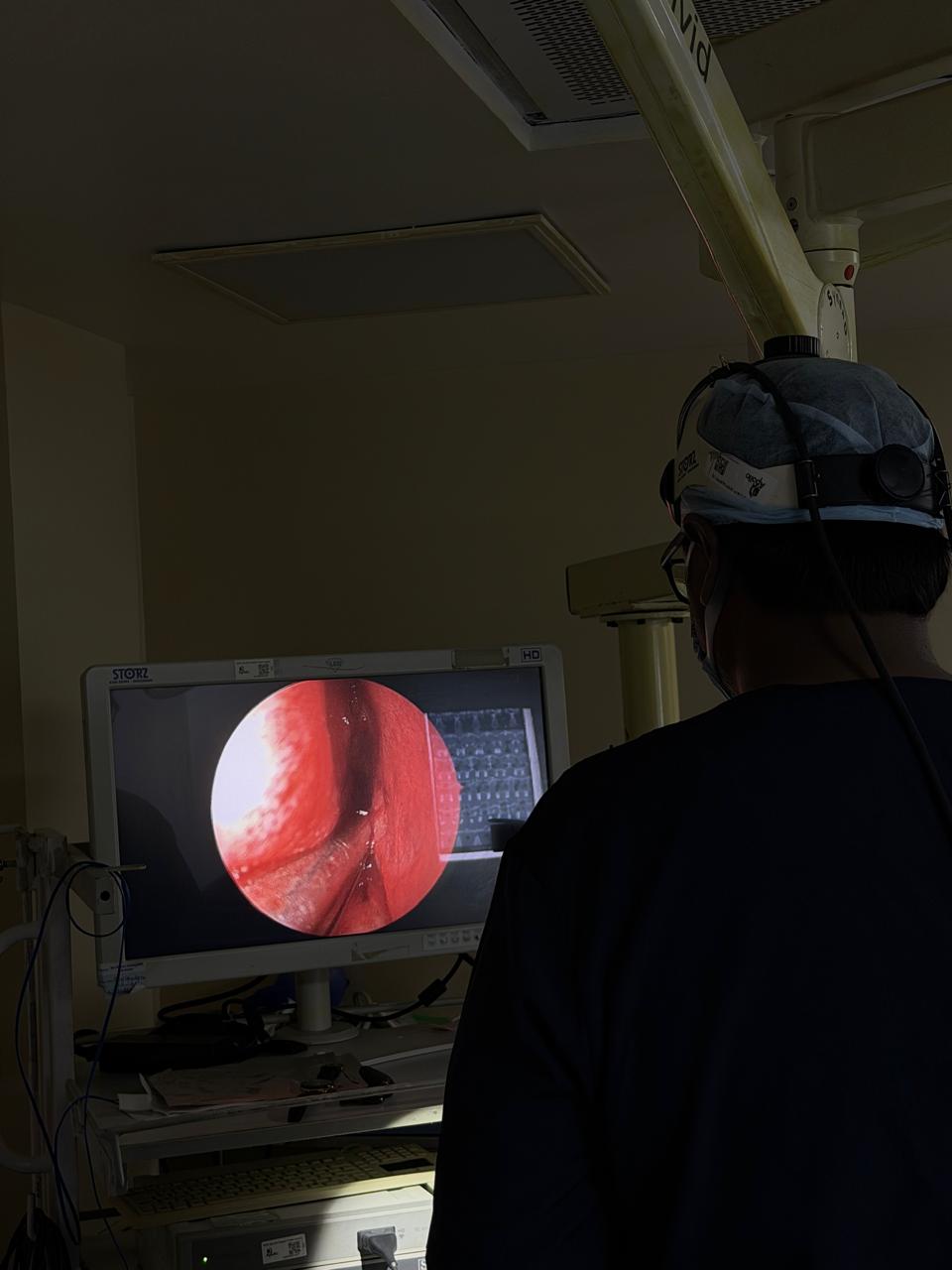 In-house surgical practice · Dr. Naseer's ENT