Overview
FESS works by widening the small openings (ostia) through which each sinus naturally drains. By restoring function rather than removing structures, it gives the mucosa the conditions it needs to heal, while preserving the normal protective lining of the nose.
For chronic sinusitis with nasal polyps, FESS is often combined with ongoing topical steroid therapy and, increasingly, biologic medication for severe disease.
When This Surgery Is Recommended
- Chronic sinusitis (>12 weeks) unresponsive to medical therapy
- Recurrent acute sinusitis with significant impact on quality of life
- Nasal polyposis blocking nasal breathing or smell
- Fungal sinus disease (allergic fungal sinusitis or fungal balls)
- As access for skull-base, orbital, or lacrimal procedures
The Procedure
Done under general anaesthesia using nasal endoscopes and image guidance for complex cases.
- Endoscopes give a magnified view of each sinus opening through the nostril
- Polyps and inflamed tissue are gently removed where present
- The natural sinus openings are widened to improve drainage
- The maxillary, ethmoid, frontal, and sphenoid sinuses are opened as needed
- Minimal packing is left, often only a small dissolvable sponge
Pre-Surgery Preparations
- Pre-op CT scan reviewed; image-guidance loaded if needed
- Saline irrigation twice daily for the week before surgery
- Short course of oral or intranasal steroid per protocol
- Stop blood thinners 5–7 days before with cardiology clearance
- Fast 6 hours pre-op
- Companion to drive home post-discharge
Post-Surgery Recovery
- Same-day or overnight stay
- Mild nasal congestion and crusting for 1–2 weeks
- Saline rinses 2–3 times daily for 4–6 weeks
- Office work in 5–7 days; gym in 2 weeks
- First post-operative debridement at 1 week; further reviews to follow
Follow-up Schedule
- Day 7 — nasal endoscopy and first debridement in clinic
- Week 3 — second debridement and irrigation review
- Week 6 — full nasal endoscopy and symptom score
- Week 12 — imaging review only if symptoms recur
- 6 months and annually — long-term surveillance
Potential Complications
- Bleeding during or after surgery (mostly mild)
- Recurrence of polyps (~30% at 5 years; lower with combined medical therapy)
- Loss of smell that doesn't fully return (rare)
- Orbital complications (very rare, less than 1 in 1000)
- CSF leak (very rare)
At Dr. Naseer's ENT, we combine FESS with ongoing medical care — surgery clears the obstruction, but long-term outcomes depend on what happens with sprays, rinses, and follow-up over the next year.
Why Have It Here
FESS is technique-sensitive — the difference between a thorough sinus operation and an incomplete one is the rate of repeat surgery years later. We aim to do it right the first time, including image guidance for revision and complex cases.
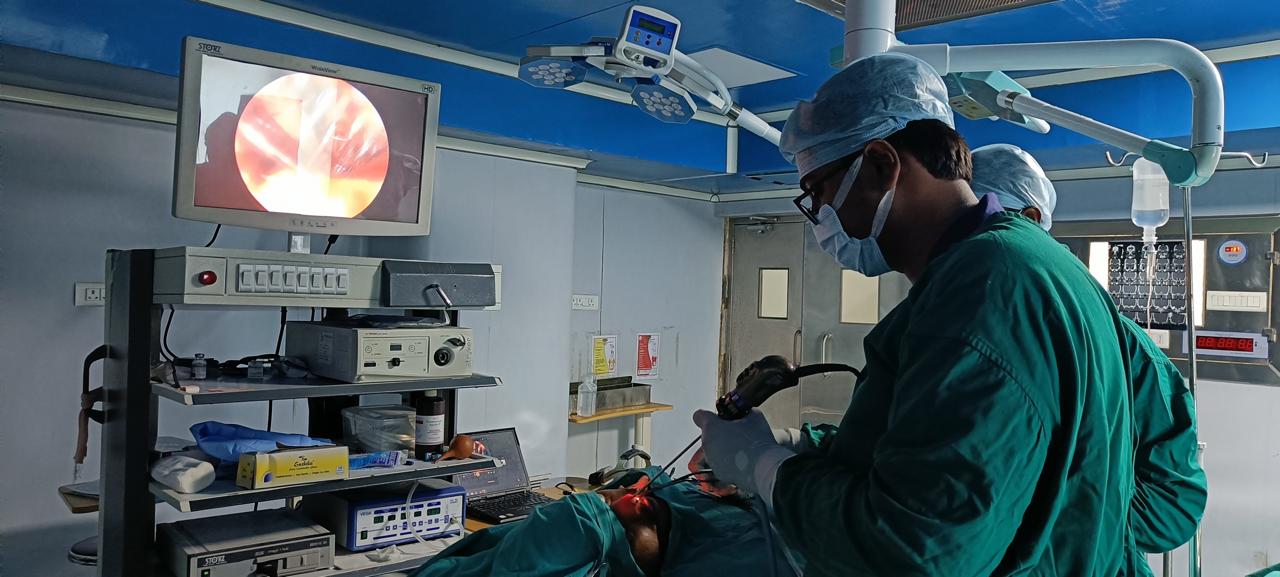 In-house surgical practice · Dr. Naseer's ENT